

SOGI 123 is a network supporting inclusive education in British Columbia, created by the ARC Foundation in collaboration with the Ministry of Education, the BC Teachers’ Federation, UBC’s Faculty of Education and all 60 school districts.
It aims to help educators create safe, inclusive schools for students of all sexual orientations and gender identities. SOGI-inclusive education emphasizes that biological sex does not limit students’ interests or opportunities, and that all identities are respected without discrimination. The approach focuses on commonalities among students over differences, promoting inclusion and reducing division.
What is Inclusive Education Parents Guide to SOGI
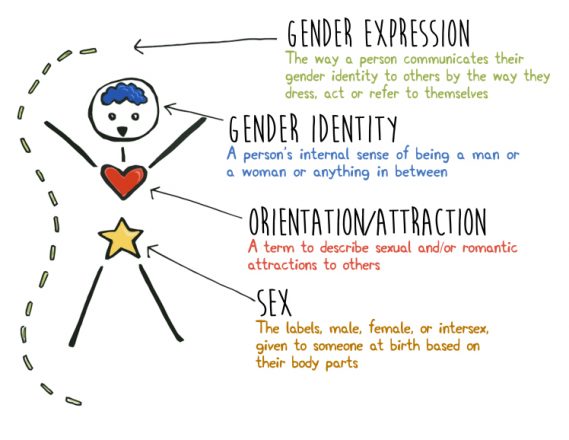
1. Sexual Orientation and Gender Identity (SOGI) refers to two parts of a person’s identity.
Sexual orientation describes patterns of emotional, romantic, or sexual attraction. This can include attraction to the same gender (homosexuality), a different gender (heterosexuality), multiple genders (bisexuality or pansexuality), or none (asexuality).
Gender identity is a person’s internal sense of being a woman, a man, both, neither, or somewhere in between. It may match or differ from the sex assigned at birth. People whose identity matches are called cisgender; those whose identity differs may identify as transgender (trans) or another term that fits them.
The acronym LGBTQ2S+ stands for Lesbian, Gay, Bisexual, Transgender, Queer or Questioning, and Two-Spirit. Two-Spirit is a term used in some Indigenous cultures for a person who embodies both feminine and masculine spirits. The “+” includes other identities and, for some, represents inclusion and acceptance.
Sexual orientation and gender identity are not the same. Orientation is about who someone is attracted to; gender identity is about who someone is. For example, a transgender person may be straight, gay, lesbian, or bisexual.
SOGI applies to everyone. All people have a sexual orientation and gender identity, and students may express or explore these in different ways. A SOGI-inclusive school respects all identities and ensures no one faces discrimination.
2. Policy and Regulation 4305 – Gender Identity and Gender Expression
The Greater Victoria School District Policy and Regulations 4305 support inclusion and prevent discrimination in schools. It sets expectations for respectful behaviour, language, and actions, guides how gender and health are discussed, and ensures access to gender-neutral washrooms and change rooms. Each school must have a designated SOGI Lead—an adult who supports LGBTQ2S+ students, staff, and families.
Regulation 4305 Gender Identity and Gender Expression
Policy 4305 Gender Identity and Gender Expression
3. Gender & Sexuality Alliances (GSAs) / Rainbow Clubs
GSAs are school groups where students of all sexual orientations and gender identities can meet in a safe, supportive environment. They focus on peer support, raising awareness of issues affecting queer and trans individuals, and challenging discrimination. GSAs may be student-led, supported by a staff sponsor, or co-facilitated. Research shows that schools with GSAs see improved safety and better overall student mental health, with benefits increasing over time.
- 10 Steps to Starting a GSA at your School (BCTF)
- So You Wanna Start a GSA?
- Out in Schools: GSA Support
- GSAs: Making Schools Safer for Everyone
4. School SOGI Leads
SOGI Leads promote inclusion, support SOGI initiatives, and share information within their school. They connect with district leads and may support GSAs or Rainbow Clubs. Any staff member can take on this role. All SD61 schools must have a designated SOGI Lead or Go-To Educator for LGBTQ2S+ students, staff, and families.
Read the full School SOGI Lead
5. Rainbow Week
Rainbow week coincides with the International Day Against Homophobia, Transphobia, and Biphobia which takes place every year on May 17th. The purpose of the week is to celebrate gender diversity and inclusion in our schools, to acknowledge that we are working to create safe and welcoming spaces for all LGBTQTS+ and gender diverse students. Here are some suggested grade-level appropriate Rainbow Week Activities
6. Victoria Pride Parade
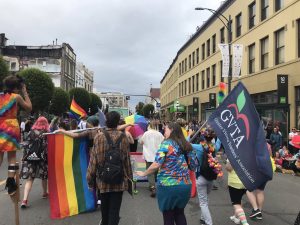
Typically, SD61 participates in the Victoria Pride parade with a float and the representation from school SOGI / GSA Leads and student GSA / Rainbow Club members. This event takes place in the first week of July. Because this event falls outside of the regular school calendar, we celebrate Rainbow Week as a visible and inclusive way to acknowledge and celebrate our LGBTQ2S+ and gender diverse community.
7. Educator Resource Guide
This SOGI-Inclusive Education Resource Guide concisely shares practices recommended by educators who have been actively supporting students of all Sexual Orientations and Gender Identities (SOGI) for years. The BC K-12 SOGI Collaborative prioritized the development of the resource guide to support SOGI Leads who also contributed and provided substantial input.
- A Curated List of SOGI Books for K-12
- Queer Glossary from A to Q
- You’ve Got Questions, What Now? A resource guide to supporting gender-questioning students (BCTF)
- SOGI 123 – Parent Brochure
- Gender Specific and Gender Neutral Pronouns
- Pronoms Neutre et Pronoms Genrés
Bite-Sized SOGI Resources
1. Bite-Sized SOGI: What Does Queer Mean?
2. Bite-Sized SOGI: Happy Alphabet Soup
3. Bite-Sized SOGI: What Does Non-Binary Mean?
4. Bite-Sized SOGI: Rainbow Washing
5. Bite-Sized SOGI: Allyship is a Verb
6. Bite-Sized SOGI: SOGI is Age Appropriate
7. Bite-Sized SOGI: Gender is a Social & Colonial Construct
8. Bite-Sized SOGI: Two-Spirit Identities
9. Bite-Sized SOGI: Why is SOGI 123 so important?
10. Bite-Sized SOGI: How to Provide Your Pronouns
11. Bite-Sized SOGI: Talking About Trans Folks
12. Bite-Sized SOGI: Inclusive Language
13. Bite-Sized SOGI: Sex vs. Gender
14. Bite-Sized SOGI: What is SOGI 123?
15. Bite-Sized SOGI: What does “trans” mean?
16. Bite-Sized SOGI: Names & Pronouns
